
Early-season Spring Chinook is always a bit hectic. There's a short window between when the fishing gets realistic and when the first season closes. The annual uncertainty about when the next opener will be increases the pressure. Both the fishing kind and the internal kind, even if the fish aren't quite here yet. It's easy to get discouraged when you don't see a lot of fish, and nobody else is catching them either. When the magic does happen, though, it makes it all the better. Recently, we had one of those days.
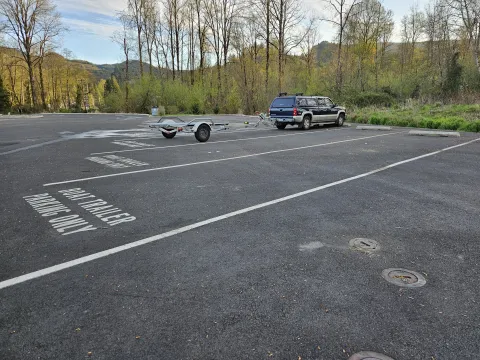
I arrived at the ramp around 5:15 AM to get the boat in the water and do any final preparations. I had told my clients to be there by 6 AM. There was a good morning outgoing tide, and there would be competition for spots to anchor up. As I prepped, I listened to the conversations from the other guides that were doing the same thing. This is a great time to get intel on what's going on with the fish.
Just as I finished up, my clients came down the dock. They had booked the whole boat and brought 4 people. If this had been a July ocean salmon trip, I would be excited about lots of fish. Today I was figuring out how to manage expectations. The fish checker reports the day before were 3 fish on 35 angler trips. We went through the usual greetings, and they hopped on board. A quick safety briefing, and we pulled away from the dock at precisely 6 AM.
I ran us out to the spot I had planned on. That was at least a good sign. With the anchor set, I put out the first round of plugs. I was hoping for the best. The water looked good, and the temperature had risen about half a degree. If they were here, they should be biting. A little bit later, another friend and fellow guide swung by and anchored to the outside of me. A bit after that, another guide popped in, and we had an old-fashioned hog line set up. We were covering everything from 12 feet of water to 40 feet. If a salmon was moving through it would have to look at our gear.
The conversation bounced between boats as it should for hog line fishing. One of my clients seemed to really love hearing the "inside baseball" chat. I talked to my clients about what they had been doing. I answered a lot of questions about fishing and fish biology. I learned about the ins and outs of building embassies for the US government in faraway places. My clients had been working internationally, and this was spring break for the youngest son. Their most recent location was Malawi in Africa. They chose to come back home and enjoy a day of fishing.
I swapped out the initial plugs with ones wrapped with tuna belly. If the water is slow, I usually start with bare plugs covered with some gel scent. This gives them a bit more action. Once the water speeds up with the outgoing tide, I wrap them with tuna belly and send them back. We coordinate line lengths and make sure that there is a literal wall of plugs. Between 3 boats, there were 9 rods in the water. We all waited for a fish to come in. The middle boat had a bite, but it didn't hook. They had a second and lost it within a minute. Then nothing.
The outgoing tide pulled my depth from 18 feet down to 16 on the sonar. It was getting shallow. The water wasn't that murky, and the sky was clear. By this time, I had swapped my middle rod to a flasher in the middle with a cut plug herring. It had worked before when nothing else did. I pulled out a spin glow, putting it on ahead of a coon shrimp. I hooked it to my inside rod and sent it flying to about 4 feet of water. There had been steelhead moving through. If three guide boats captained by guys I respect can't find a springer, maybe I could find some other action. Still nothing.
All three of us started calling and texting our friends that we knew were fishing nearby. Each time, we hoped desperately for a good report. Nothing below us. Nothing above us. A few take-downs, but nothing stuck. I was getting antsy. My clients were enjoying the day, watching ospreys dive on bait. They made a game of trying to spot the sea lion that would periodically cruise the channel. Fortunately, he never came close, but it didn't matter. I found myself talking about the better days of fishing. I stopped myself and cringed a bit inwardly. These guys were probably thinking, "he should have had us come then, instead of now". I do my best to be clear about what to expect with early Springer fishing. I describe it as the most challenging fishery we have. Even with that, I think that people often come to the dock expecting to be the exception. I know several guides that don't offer early spring chinook trips for that reason. They don't want people to be disappointed if they go home empty-handed.
The outside boat moved upriver to a different spot, and I moved out where he was. 23 feet of depth felt a lot better given the high sun and clearing water. All the rods were back to plugs, and the sun was getting high. I remembered some advice from a mentor. When the fishing is tough, don't go crazy changing things. Just go with what you know works best and keep at it. I put fresh wraps on all the plugs and set them down. One of my clients was glued to the sonar like it was a final four game during overtime. If a fish came by, or even something that looked like a fish, I knew he would let me know. There was still nothing. The boat that was now inside of me started picking up. They had to go home early for a doctor's appointment. I decided to make a move as well.
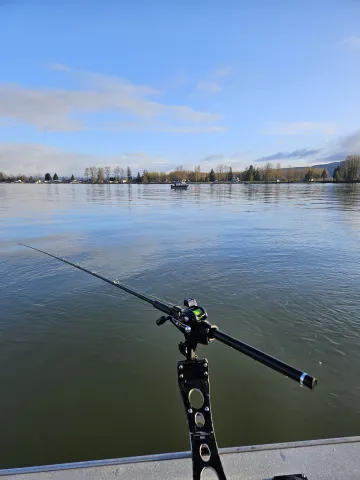
I started swapping out plugs for trolling gear. The outside rods would have 360 flashers with stuffer baits. The inside rods would be running in-line flashers with cut plug herring. There was enough current going that I could get the rods out while we were on anchor. I pulled the socks, fired up the kicker, pulled the anchor, and started trolling. I looked at either side of me on the side-scan looking for fish. I swerved out into even deeper water when the shallow wasn't showing anything. I thought I saw one mark, but nothing came of it. We reached the end of the pass and reeled up. It was time for a bigger move.
Usually, I move downriver when the fishing isn't good. If you're in a gap of fish moving upriver, there's no sense in staying in that gap. Going downriver means a chance to catch fish that you haven't seen. The reports from downriver had been poor, though, and the trolling area there was pretty spread out and fragmented. I had seen some fish move through on the sonar while we were on plugs. I chose to go upriver.
I went way up above the other boats that I saw. The boat that had been outside of us was there. I also spotted some other boats that I recognized as belonging to some really good fishermen. "If that guy is still fishing, then I don't feel so bad," I thought. That little bit of comfort quickly disappeared as the water got a bit choppy and the wind picked up.
The top was on the boat, and it started catching the wind. My clients and I struggled a bit to get the rods out, and we had a tangle. Clearing tangles in a foot and a half high chop while trolling into the wind is not easy. Finally, the torn cut plugs were replaced, and the gear was fishing. I worked the boat against the wind to try to keep it straight. I didn't put a sock on the bow to add stability, but probably should have. I did trim the main over a bit to help compensate. We worked our way out of the worst of it, and the water smoothed out. Even worse than no bites, I wasn't seeing any fish at all.
I stayed glued to the sonar and adjusted the throttle to counter any wind gusts. The 360's were working slowly, which is what I wanted. I didn't want things to move too fast in the water. It was a delicate dance between having enough power to steer and trolling too fast. About halfway down the pass, there is a big shelf that you must swing out wide to avoid. While the depth isn't bad on top of it, it's covered in weeds. They make it nearly impossible to fish in anything less than 18 feet of water. But moving away from the island would subject me to more wind. I had to swing out anyway.
The wind caught the top, and I soon found myself in 35 feet of water. My clients adjusted the rod depth down, and we continued, trying to make the best of it. It's not that 35 feet was magically too deep; I just didn't think the fish were out that far. We passed the shelf, and I pointed the bow back towards the island. The sonar ticked shallower again. At 25 feet, I turned back west and started running parallel to the shore. I looked up at the side scan and saw what looked like a diagonal streak. It started at the edge and moved towards the boat as the sonar scrolled. I waited to see if something would show up on the 2D and down scan. I looked over at the rods on the left side to see if something would come in. They kept working normally. False alarm.
I turned my head to look back and noticed the right inside rod take a dive. This was one of the triangles with a cut plug on it. "Probably bottom," I thought. I started to turn to give it a crank when it took another dive, more assertively this time. Before I could reach it, it started bouncing, then pulling. The line started rolling off the reel. "Fish! Fish! Fish!" We had designated the youngest as the first one to catch a fish. He had never caught a salmon before. He was also sleeping under the top. His dad shook him awake, and he stumbled to the back of the boat. I directed everyone else to start reeling. I grabbed a rod, got it in, handed it off, grabbed the net, and turned around. "I don't think it's there," he said. I looked at the flasher, and it was steady in the water.
When a flasher is moving normally, it has a motion to it, even an inline one. It sways and wobbles a bit with the current. If the lure is loaded with weeds or a fish, there is no sway. It moves firmly. This flasher was moving firmly. "Keep reeling," I told him. "Don't stop reeling, don't give it any slack". He blinked his eyes a couple of times and started to say, "I still don't think..." then chrome flashed under the water, just behind the flasher. The fish was thrashing.
"Reel to the bead, and when I tell you to, swing the rod to the front of the boat. Keep the tip down, it helps keep them from jumping”, I instructed. He reeled down to the orange bead I put just ahead of the line lock. I could see the fish get close, as it turned towards the boat, I took my chance. Just as the net hit the water, the fish turned away, and I brushed its tail with the net. It went wild and shot off. I pulled the net back.
"It's pulling!" The rod was bent over, and the line screamed off the drag.
"It's ok, just keep reeling," I tried to help him not panic. My own mind resembled a pack of chipmunks on a trampoline after someone dropped a bunch of nuts on it. He reeled down to the bead again, and the fish glided in front of me. It took a quick turn, but then came back towards the boat. I shoved the net under it, lifted, and watched it get surrounded. Feeling the net, the fish started thrashing around. I started looking for an adipose fin. We haven’t gotten a fish yet. It had to be hatchery.
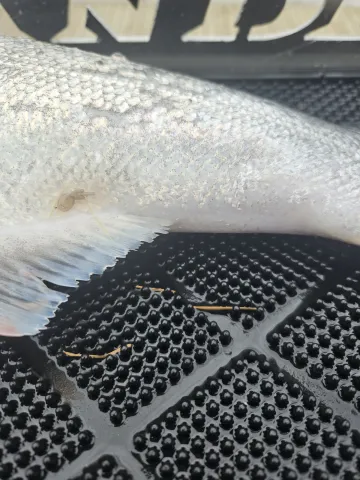
I pulled the fish towards the boat and reached in to steady the fish while trying to avoid the hooks. The fish flipped around, and I saw the back. It was smooth with a beautiful healed scar just ahead of the tail. No mis-clip, just perfect. "Hatchery!" I yelled. My own heart was pumping, and I could barely hear the cheers behind me. I lifted the fish and heard four jaws hit the deck. In the net was a beautiful, purple-backed, chrome-sided, slightly gray belly upriver Spring Chinook. I looked up and saw smiles all around. Dad seemed beside himself; the younger guys were thrilled. They were all talking about how excited they were.
I rushed to get the rods back out while my client tagged the fish. We took pictures, and I filled the bleed bucket with water. With the gills cut, the fish went headfirst to make sure the meat was as high-quality as possible. The latest price on Columbia River Spring Chinook was $70 per pound. This fish would give them about 8 lbs. of meat. I wanted to treat it right.
I put us back on course, circled back through the area where we had caught the fish, and hoped for another. It wasn't to be. Once bled, I put the fish in a bag, and it was placed on ice. I always bag the fish first so clients can use the ice in coolers on the way home. Another trick I learned from a mentor. We said hi to the boat that had been on the outside of us for most of the morning. He had one take-down that didn't stick, and didn't see any other boats catch anything. We set up for one final pass. That fish had bit just before 4 PM. We had been fishing for 10 hours. If we had found one, I didn't want to give up a chance at a second. I didn't have any clients the next day, and they wanted to keep fishing, so we did.
The second pass didn't give any results. I thought I saw one more on the sonar come in, but it didn't hook up. We got to the bottom, and I looked around. Everyone was still flying high from catching that fish. We all agreed that it was time to head back to the dock. There were only two other trailers left when we pulled in. The boat for one of them was already on the dock. I tied up, and everyone headed for the restroom. I retrieved my fillet table from the back of my truck.
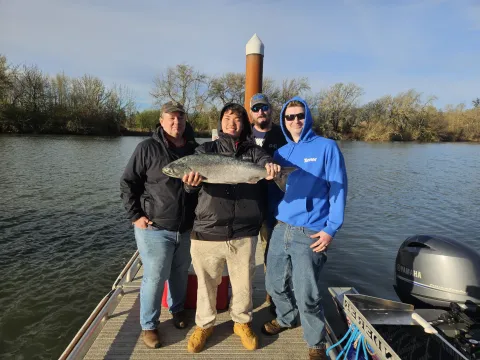
After a group photo, I cut up the fish and gave out a quick recipe tip. For Springer, just bake it at 425 for about 12-15 minutes maximum. Maybe a little salt and pepper. If you're looking to spice it up, top it with some mayo and sriracha first.
Dad pulled me aside and thanked me. "The point of today was to get my son on his first salmon. I just want to say mission accomplished. The salmon is great, but we're going to remember this for a long time. Thank you." They headed for their vehicle, still smiling. The other boat came in, loaded up, and headed out while I was cleaning up. Mine was the last trailer in the parking lot. Once in the truck, I sent a quick thank-you message and headed home.
I was exhausted. I thought about fishing on my own the next day, but decided against it. I wanted to savor the experience myself, and maybe sleep in. Like I said at the start, springer fishing can be tough, but the payoff is worth it!


