
This time of year is a sad part of the season for me, and that's "Ice Off". As many of you know, ice fishing is my favorite winter activity. When the last sheets of Ice melt away, freeing up the shoreline makes it easily accessible. Panfishing quietly slips into one of its most overlooked and most rewarding phases. The ice is gone, the crowds are not back yet, and beneath the surface, Bluegills, Crappie, and Perch are in that familiar transition. For most anglers who've just spent months staring at a hole in the ice, they know it's not the end of the season. It's simply a shift in approach.
The Ice Off Mindset
Ice-off panfish are not yet in full swing in Spring mode. Water temperatures are still cold, often hovering around the upper 30s to mid-40s, which means fish metabolism remains slow. They still won't chase far or waste a ton of energy chasing a meal. And typically, they won’t behave as they do during the shallow water spawning frenzy that's weeks away. The KEY during this window is understanding that panfish are migrating and usually aren't stationary. During late ice, many fish hold in deeper basins adjacent to their spawning beds. When the ice leaves, they don’t immediately flood the shallows. Instead, they stage along transition areas such as subtle breaks, inside bends, emerging weed edges, and dark bottom bays that warm slightly faster than the main lake. Basically, your job is not to find spawning fish, but to intercept the travelers.
Always Start Where Winter Ended
One of my most consistent strategies every year is to begin near the last ice locations I was fishing at prior. If I had found suspended Crappies over a basin in late February-March, I would begin on that same basin edge in early April. They may have slid shallower, just a few feet, but often remain close until stable warming patterns push them further shallow. Bluegills behave similarly but tend to relate more tightly to structure. Especially remaining weed lines, timber, and those soft-bottom transitions. Perch are often the panfish Wildcard. They will roam, sometimes in "Wolf Packs", feeding aggressively when conditions line up. I'll focus on vast shallow flats, just adjacent to deeper breaks and drop-offs. Particularly in areas with sand to mud transitions, as Perch love to gorge themselves on bloodworms. By pounding the bottom, creating a plume and disturbance, drawing in the Pearch. Electronics, whether it's a basic Sonar or a Forward-Facing unit, can be invaluable now. Fish may suspend unpredictably from one day to the next. Seeing them before casting saves hours of fan casting and blind effort.
Warmer Water Wins
In early open water, even a two-degree difference matters. Northwest-facing shorelines are protected from cold winds, shallow bays with darker bottoms, and areas that receive extended afternoon sunlight warm quickly first. These little micro warming zones attract zooplankton, which attracts baitfish, which attracts panfish. One other thing - don't overlook water clarity. Like wearing a darker shirt, stained water warms a little faster than crystal clear lakes. If I have several lakes to choose from, I'm typically hitting the stained body of water as they often out-produce clearer systems after Ice Off. So, remember, the Temperature is the compass. Let it guide you!
Slow Presentations Are Key,
Cold water demands patience and restraint.
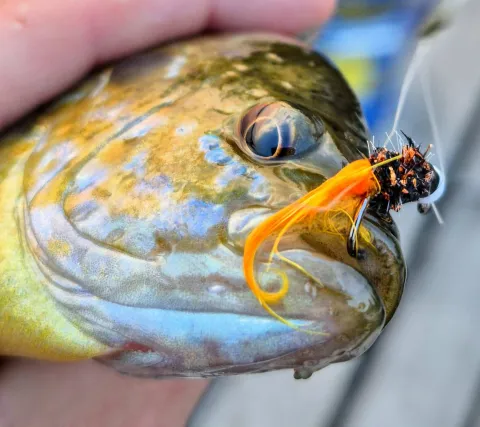
Small Jigs - 1/64th to 1/32nd ounce tipped either with soft plastics, waxworm, maggots, chunk of crawler. Hair Jigs work great during this period because of their movement. I keep my retrieve deliberate and slow. I will cast and allow my bait to pendulum naturally, as I add in subtle twitches. Many strikes will occur during the fall. If you feel a slight tick, or notice slack in your line, set the hook. I won't just fan cast jigs but also slip bobbers and jigs. Bobbers are a lethal tool. Suspending a jig and offering above suspended fish allows you to hover in the strike zone longer. Remember, patience pays dividends. If the fish won't chase, bring the bait to them and leave it there.
Think Vertical and Horizontal
Sometimes, there are situations with early-season panfish, where they might be suspended off breaks and not reachable by standard casts. If you’re able to position your boat over the top of them, jigging them vertically can unlock a different bite. I like to drift slowly with the wind, using 2lb-4lb test to maximize sensitivity and a natural presentation. Vertical jigging allows me to adjust to depths quickly until you dial in the exact depth the fish are holding. Meanwhile, from shore, keep fan casting as far out and cover water methodically. Early season fish group tightly, so you might go twenty casts without a bite, then suddenly connect on five in five casts. I'll say, when you find them, quickly get back on them because they don't travel alone.
Adapt To Mood Swings
Spring weather is unstable. A warm three-day stretch can ignite a bite that feels like peak season, only for a cold front to shut it down overnight. After a cold snap, I often find fish have slid a little deeper and become less aggressive. I'll downsize my presentation even more, 4mm-5mm tungsten jig maybe. I'll lengthen my pause and fish slower than I think I should. Conversely, during stable warm trends, fish may push shallower than expected. Don't be afraid to check two to four feet of water on calm afternoons. I've seen some of the biggest Bluegills caught in skinny water before most anglers believe they should be there. Flexibility separates average outings from memorable ones.
Light Tackle, Big Rewards
Ice Off panfishing is not about power, but more about finesse and feel. I will always have an Ultra-Light rod with a soft tip to detect subtle bites. Paired up with a smaller 500 series reels with 2-6lb line and a smooth drag for unexpected surges from a Slab Crappie, or a Bull Bluegill. And there's always something deeply satisfying during this period. The boat launches are quiet, and the air still carries a little chill. Blackbirds sing from the cattails while your breath fogs the morning. I really look forward to these special days every season.
Timing The Transition
Being able to home in on these migrating fish is very rewarding and gives you a sense of self-accomplishment. As water temperatures approach the low 50s, panfish begin committing to shallow spawning areas, as the Males begin scouting beds. The bigger schools of fish will break up, and that predictable staging bite shifts into shallow shoreline action. But to me, that in-between window, that subtle, strategic, thoughtful phase right after Ice Off, may be the purest form of panfishing I find all year long. It rewards observation and patience. And it rewards the anglers who understand seasonal movements and behaviors, instead of chasing yesterday's reports. When the ice melts, most anglers wait for the "Real Spring". The smarter move is to launch early, think like a migrating fish, and approach the lake with quite precision. Because under that freshly opened water, panfish are already on the move, and if you meet them halfway, the season starts long before most anglers realize it's begun!
"Reel in the Memories".


