
November is here, bringing chilly winds and icy rains. Although the year is almost over, the good news is that the coho run is not. Many rivers, coastal ones in particular, hold late-running fish from November well into December and January. But how do you get these fish in your cooler?
Bait has its time and place. For picky A run fish in clear, low water conditions, eggs are king. November is the perfect time to start using hardware for these big and aggressive B-run fish. Let's go over how to use spinners and spoons for these late B run coho.
Spinners
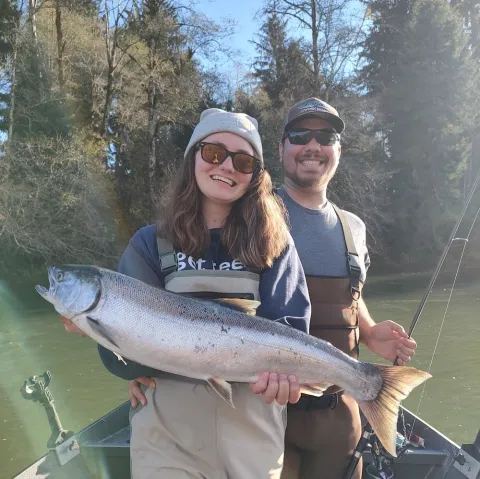
If I had to pick my favorite way to fish for coho, it would be throwing spinners. The takedown is aggressive, and there is no question when you have a fish on. Spinners are a great way to search for fish when you aren't sure where they are holding. Cast and retrieve in a spot several times, then walk down 10 steps and repeat until you get a bite. Late-run fish are more aggressive and more likely to strike a well-presented spinner. It's a good idea to bring weighted and unweighted spinners. Make sure to use a bead chain or two attached to a snap swivel so you can change between the types of spinners easily. Unweighted spinners such as Wicked Lures can be fished with a variety of different inline weights according to the depth and speed of the run you're at, making them incredibly versatile. I carry inline weights between 1/4 oz and 1/2 oz. Wicked Lures come in a variety of different colors and sizes. I like the pink/green ones as well as the black/pink ones for most conditions.
Alternatively, weighted spinners such as Blue Foxes are a great option as well. Use small, dark size 3 spinners in clear conditions, and bright size 5 or 6 spinners in murky conditions. Fish will chase down spinners and aggressively chomp them, making for a fun fight. Vibrax spinners have a lot of drag and tend to ride higher in the water column than torpedo spinners. Use the right spinner for the conditions!
Spoons
Much like spinners, spoons are an effective way to search the run for aggressive fish. Spoons can be fished a multitude of ways for coho. You can drift small spoons like Dick Nites or throw larger ones, like Little Cleos and Kastmasters. Smaller spoons wobble and dart when drifted like a cork and a yarn. Many northern Puget Sound anglers use this technique with great success. Use a 3-6ft leader and don't change out the hook- no matter how tempting it is! Bigger hooks would change the action of the spoon. The stock hook works just fine as long as you don't horse the fish in. Cast upstream and follow the drift with your rod tip, using just enough lead to tick the bottom every few seconds. It takes some patience and time to learn what a bite feels like. It can be subtle, so don't wait to set the hook until you feel headshakes.
For larger spoons, it's tempting to fish them like a spinner, but the technique is slightly different. Cast upstream and allow your spoon to sink. Point your rod at the spoon and mend your line as it drifts downstream. Feed out the line as necessary to keep the spoon slowly wobbling near the bottom. The action drives coho crazy! The takedown is much like a spinner bite- aggressive and unmistakable. 50/50 colors work well in most water conditions. It's a good idea to keep a variety of different spoon shapes and colors to see what the fish key in on. Every day is different, and every fish is different.
Setups
Rods and reels for hardware fishing tend to be based mostly on personal preference. While some anglers prefer to use a heavier, shorter rod, I like to use a light and long noodle rod. I find that these absorb the headshakes and jumps much better than a short, stiff rod. They also allow me to cast light spinners when the conditions call for it. Pair your rod with a size 3000 to 4000 reel.
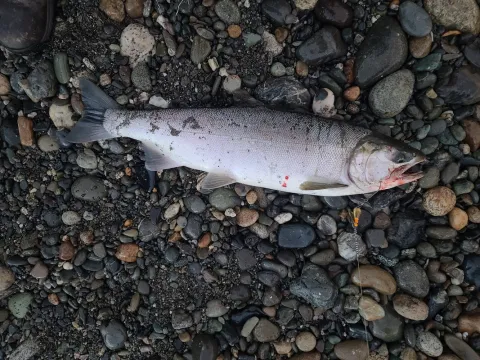
I highly recommend using braided line with a monofilament top shot. This allows you to have the sensitivity of braid, but if you break off, you'll leave monofilament in the river instead of braid, which will break down much sooner. 8-17lb rated rods work great, but I've used 6-12lb rods as well. Use at least an 8ft rod. For my leader line, I use 10-15lb fluorocarbon. I find it has good abrasion resistance but also looks almost invisible in the water. Tighten your drag, but loosen it up after your hookset. Remember, these B run fish are big, hook-nosed brutes. You're in for a fun fight!
Now is the time of year to perfect your hardware technique for those large, aggressive B-run coho. Spinners and spoons can be used in both slow and fast water, making them a versatile technique. Not every river is open in November, so make sure to check both the regulations and emergency rules before heading out. Pinch those barbs or buy barbless hooks if required; it never hurts to double-check. The Fish Washington app is a great resource!


